The Zero-Carbon Airport Fueled By Güntner CO₂ Technology
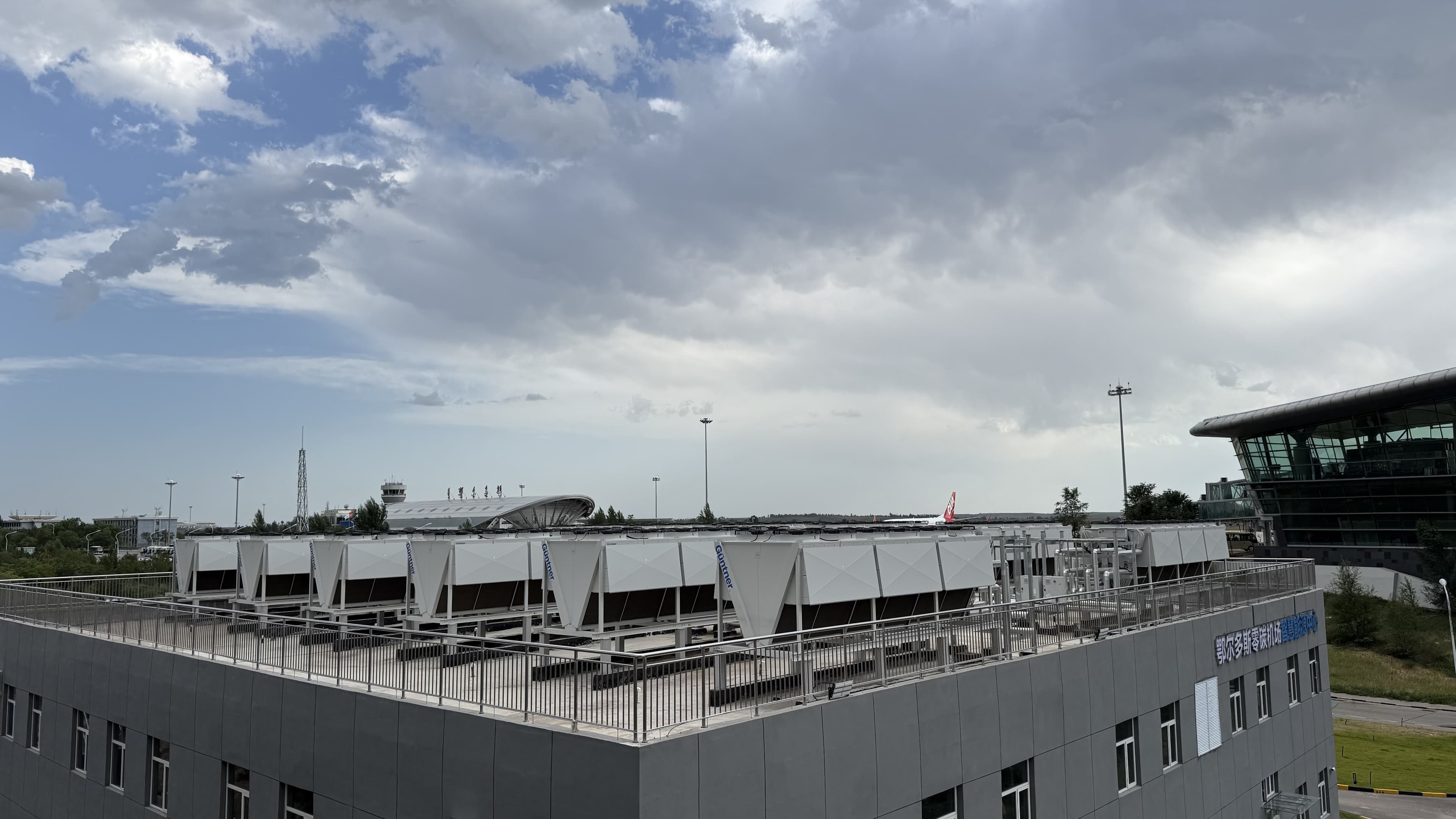
Ordos, a major energy hub in northern China, produces over 2 million tons of coal and 510 million kWh of electricity daily, powering millions of homes nationwide. In 2024, the city initiated the "Zero-Carbon Airport" technology demonstration project at Ordos Ejin Horo International Airport, which was completed by the end of 2025. This initiative was undertaken in response to the Civil Aviation Administration of China’s (CAAC) 2022 Outline for Green Development Policies and Actions.
Ordos Airport is the first 4E-level regional airport in North China, with a current annual passenger volume of over 3 million. The "Zero-Carbon Airport" initiative is a comprehensive program designed to eliminate fossil fuel dependence and achieve a net-zero carbon energy supply for terminal buildings. This breakthrough relies on three key technologies: green power supply, integrated CO₂ heating and cooling, and smart control. Among these, the integrated CO₂ heating and cooling technology is a standout solution for achieving decarbonization goals, with Güntner providing essential equipment support for this critical technology.
INTEGRATED HEATING AND COOLING
Solving the core challenge of decarbonizing civil aviation
Ordos Airport's original energy system was like most large public buildings globally: it used R134a and other Freon refrigerants (with a GWP of up to 1300) for cooling in summer, directly discharging waste heat. In winter, separate gas boilers were required for heating. This not only caused a double waste of energy but also resulted in extremely high carbon emissions.
To achieve a true zero-carbon transition, the Peking University Ordos Institute of Energy led the effort to plan an innovative technical path centered around integrated transcritical CO₂ heating and cooling technology for the airport. This solution aims to fully utilize geothermal and ambient energy to achieve integrated supply of cooling, heating, and hot water, and store surplus cooling, heating and electricity, forming a cross-regional combined supply model integrating cooling, heating, power, and energy storage.
GÜNTNER'S CORE SOLUTION
RELIABLE PERFORMANCE IN EXTREME COLD
In this groundbreaking project, Güntner utilized its substantial knowledge of natural refrigerants to partner closely with Haier Carrier, which provided six sets of transcritical CO₂ heating and cooling units. These units were essential components of the system's core technical infrastructure.
The primary challenge Güntner faced was Ordos's harsh winter climate with temperatures dropping below -30°C. This required equipment capable of maintaining efficient and stable operation under such extreme low temperatures. More crucially, this project pioneered the adoption of direct expansion CO₂ heat pump technology, a first for Güntner's Asia Pacific market. Operating without benchmarks, every technical detail, starting from system matching, required bespoke engineering.
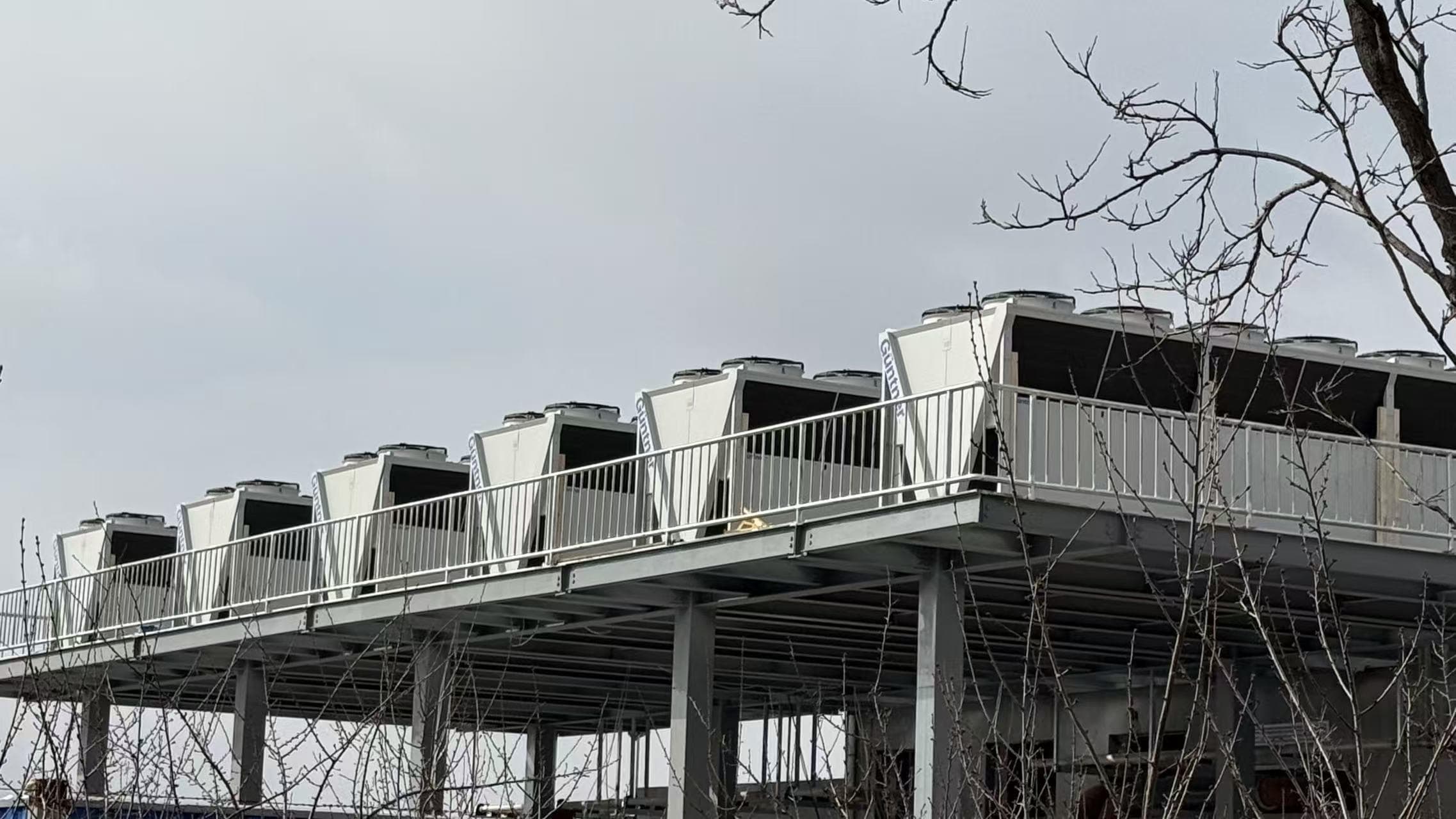
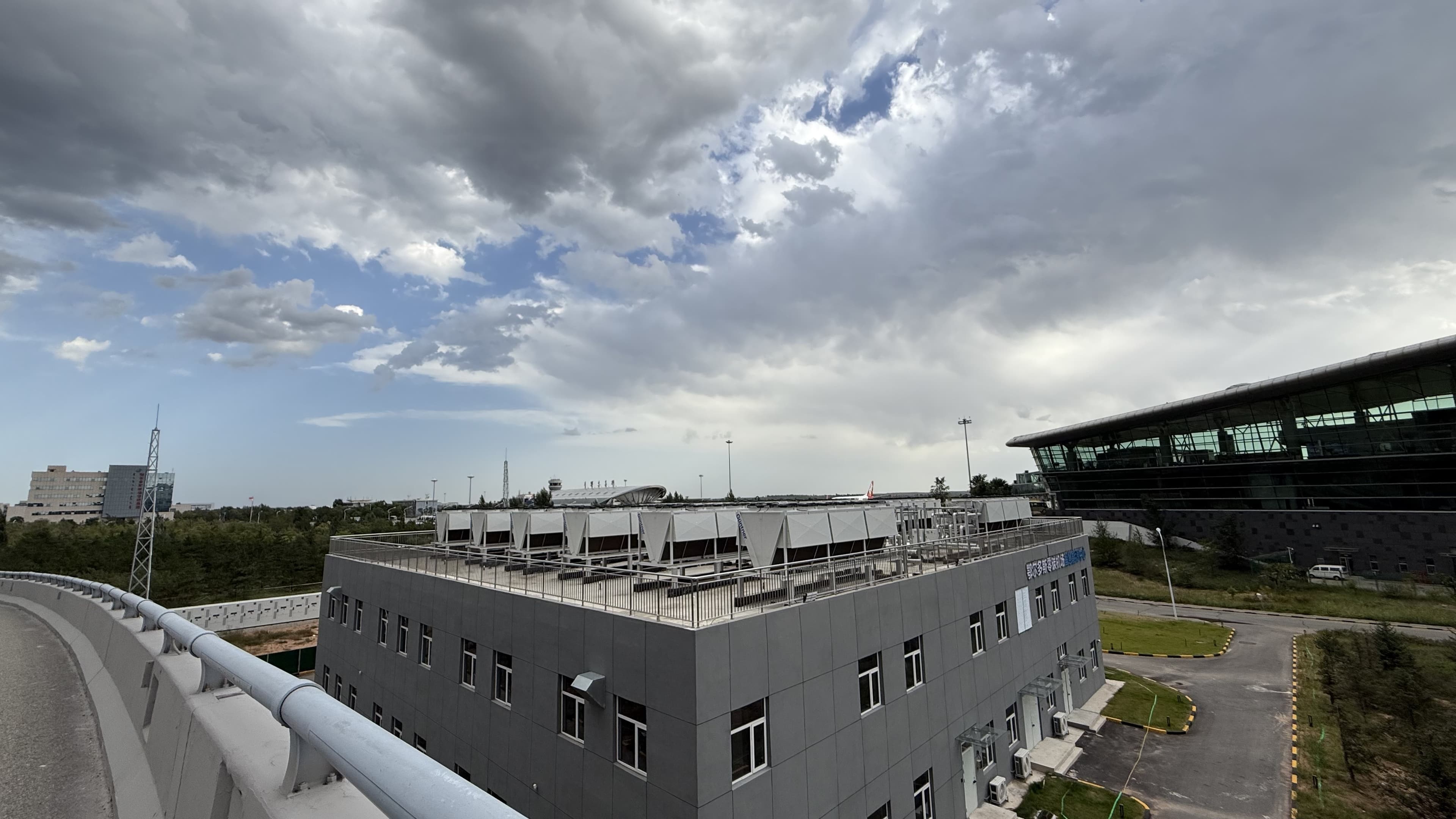
Through the close cooperation of the Chinese sales and service team, the European technical department, and the Indonesian engineering team, Güntner ultimately supplied 18 customized high-performance evaporators for the project, manufactured at Güntner's Indonesia plant. Each unit has a rated power of 350kW and is designed to operate under harsh conditions with an ambient temperature of -12°C and an evaporating temperature of -18°C. These units are installed in two equipment rooms, collectively serving the airport's 18,000 m² terminal building and surrounding structures:
- Six Güntner V-shape evaporators are specifically used for the heating system retrofit of the existing building, replacing the original fossil fuel boilers.
- Twelve Güntner V-shape units are used in the new buildings, supporting both winter heating and summer cooling needs. Technologically, they can even operate simultaneously, greatly enhancing system utilization and flexibility.
This system achieves highly efficient seasonal climate control. It demonstrates how modern thermal management solutions can revolutionize energy utilization in large public infrastructure.
TECHNOLOGICAL INNOVATION AND IMPACTFUL RESULTS
The deep synergy between Güntner evaporators and Haier Carrier's CO₂ units perfectly complements the overall architecture of the "CO₂ refrigeration/heat pump ground source energy storage system".
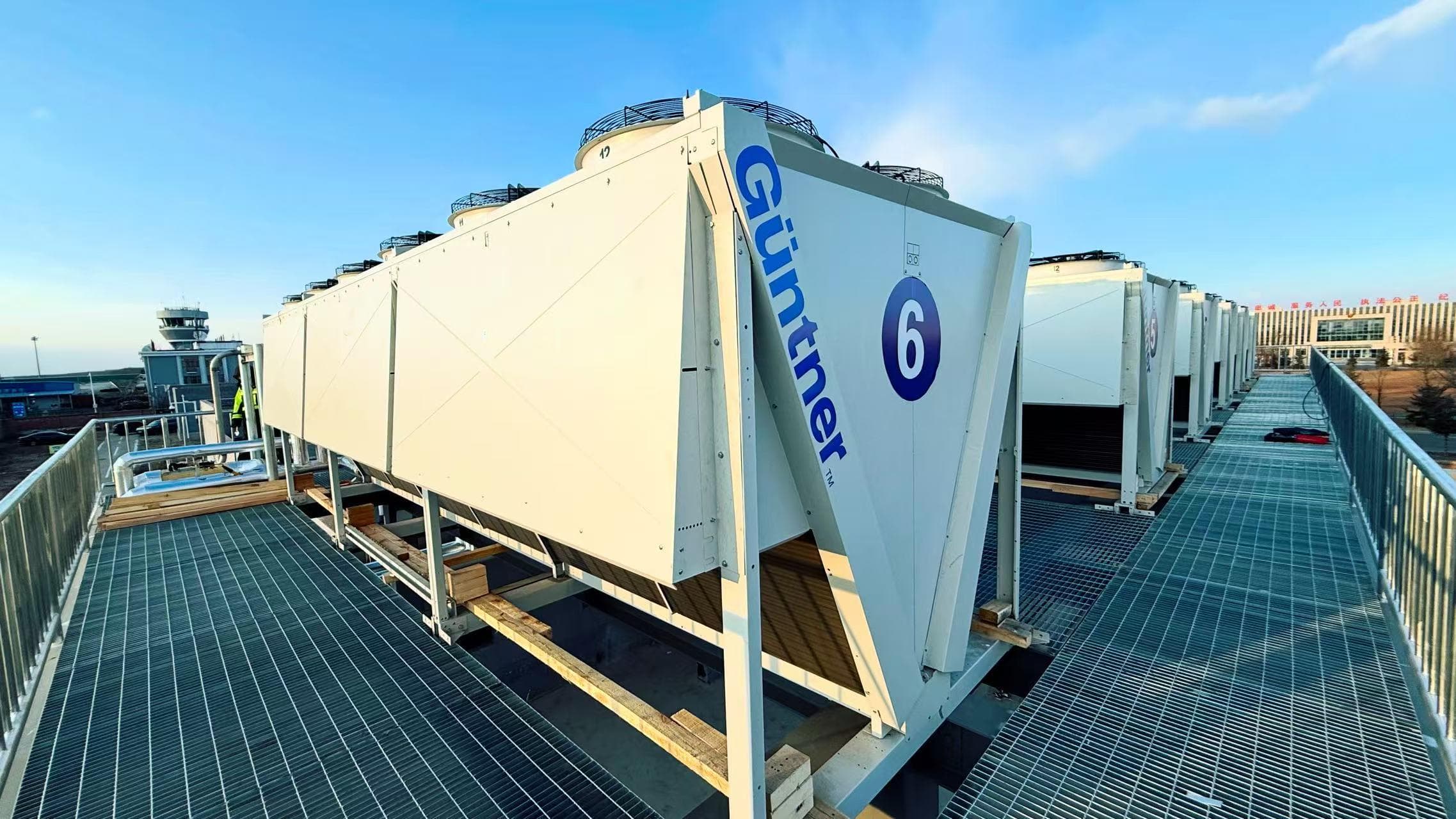
- Waste Heat Recovery, Efficient Synergy: The CO₂ system recovers waste heat during cooling mode and stores it underground via ground source heat storage technology. In winter, the Güntner evaporators ensure stable operation, enabling the system to extract the stored heat for heating. It raises the ground source heat pump's supply water temperature from 8°C to over 25°C, achieving a seasonal heat storage and extraction efficiency of over 70%. This makes it well-suited for northern climates with low temperatures.
- Quantifiable Carbon Reduction: The entire CO₂ heating and cooling system reduces the airport's carbon emissions by 5,500 tons annually and saves 5.5 million kWh of electricity.
Choosing future-ready heat collectors to empower your heat pumps
SOCIAL RECOGNITION
THE GLOBAL SIGNIFICANCE OF A ZERO-CARBON PRACTICE
Ordos International Airport's zero-carbon initiative serves as a model for the transformation and upgrading of resource-based cities in China, while providing a tangible and replicable transition solution for high-carbon industries around the globe. According to a spokesperson for the CAAC, "This is the world's first truly zero-carbon airport"—a statement that underscores the project's pioneering value.
Güntner is deeply proud to have played a pivotal role in this groundbreaking project, contributing to China's and the world's carbon neutrality goals.