Naturally efficient: How CO₂, NH₃ & others make a difference in industrial cooling

In nature, everything has evolved to maximal efficiency, so natural cooling is the logical answer to tightening global regulations and accelerating environmental goals, like the EU F-Gas Regulation, AIM Act (US), and the Kigali Amendment.
To be competitive, natural refrigerants are no longer an option – they’re essential. Even more so because synthetic refrigerants are rapidly losing viability due to their high global warming potential, supply chain issues, strict phase-down regulations, and rising costs. Their days are numbered, as they offer no long-term compliance, investment security, or alignment with modern ESG and sustainability goals.
Browse through our slideshow gallery and discover why these sustainable alternatives are leading the way in energy-efficient, eco-friendly cooling.
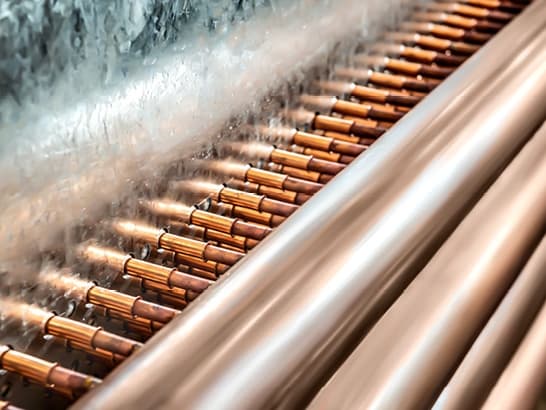
Natural refrigerants at a glance
CO₂ (R-744): Non-flammable, non-toxic, ideal for medium- to low-temperature applications.
Ammonia (NH₃, R-717): Highly efficient, zero GWP, widely used in industrial refrigeration but requires careful safety management.
Propane (R-290): Low GWP, excellent thermodynamic properties, suited for small to medium systems.
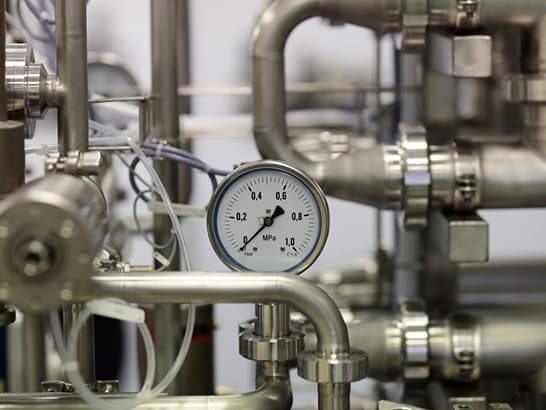
CO₂ (R-744)
- Zero Ozone Depletion Potential (ODP), GWP = 1
- Operates efficiently in supermarket refrigeration & heat pump systems
- 7–20% energy savings in pilot projects (e.g. Carrefour, Metro) vs. R-404A systems
- Requires high system pressure
- Has a low critical point
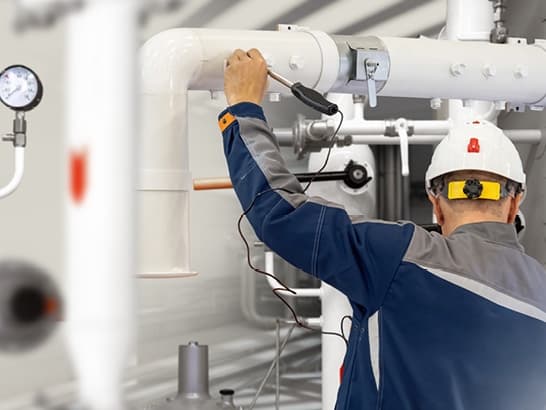
Ammonia (NH₃, R-717)
- GWP = 0, excellent thermodynamic efficiency
- Common in food processing & large industrial plants
- Approx. 10–35% efficiency gain vs. R-404A, R-134a or R-410A – depending on application
- Irritates eyes and respiratory tract even at low concentrations
- Good traceability in case of leakage

Propane (R-290)
- GWP < 5, low environmental impact
- Used in commercial refrigeration and smaller HVAC units
- Tested 10–15% more efficient than R-404A, R-134a and R-410A in many tests
- Highly flammable and explosive
- Operates at moderate system pressures, simplifying components and service

Where natural refrigerants excel
- CO₂: Supermarkets, cold storage, heat pumps; freezing applications
- NH₃: Food & beverage processing, chemical manufacturing, storage and logistic centers, freezer applications, heat pumps
- Propane: Commercial refrigeration, residential HVAC

Why choose natural refrigerants?
- Superior energy efficiency reduces operational costs
- Minimal environmental impact supports ESG goals
- Compliance with F-Gas regulations ensures future-proof installations

Challenges: Balancing efficiency & safety
- Training and certification critical for safe handling
- Initial investment may be higher, but long-term savings prevail
- Innovation in system design continues to improve performance and safety

Güntner as Your Partner for Sustainable Cooling
- Finding the right solutions for you – optimized for natural refrigerants
- Comprehensive training and technical support
- Reliable components and systems designed for safety and efficiency
Let’s Talk About Natural Refrigerants
Contact us for your questions and concerns regarding natural refrigerants by clicking on the button below. Or read more about our solutions to meet the future of sustainable cooling by clicking on the following link:

LET’S TACKLE YOUR COOLING CHALLENGES TOGETHER
Behind every great cooling solution lies a deep understanding of your specific requirements, industry and application. Therefore, every solution starts with a conversation.