In Focus: Hygiene
Failure to maintain correct hygiene standards in the food and beverage industry can be costly in more ways than one. When products become injurious to health due to failures in the production or storage process, companies are likely to face heavy fines. In addition, the bad publicity that can result is likely to cause reputational damage, while products will need to be recalled. In the worst-case scenario, consumers can be made ill or even die as a result of hygiene negligence.
YOUR CHOICE OF COOLING AND REFRIGERATION EQUIPMENT MATTERS
THE ENVIRONMENT IN WHICH FOOD AND DRINK PRODUCTS ARE PRODUCED AND STORED MUST MEET THE HIGHEST STANDARDS OF CLEANLINESS.
A wide range of factors can negatively affect hygiene standards. In terms of cooling and refrigeration, fans can transmit airborne micro-organisms that may be breeding inside a piece of equipment that is difficult to clean, and contamination can come from condensate dripping from pipes. It is also possible that toxins are present in the materials from which cooling equipment is constructed, and these may be transferred to food and drink products.
Equipment must also be reliable. A mechanical failure can lead almost immediately to the beginning of a spoiling process: every hour during which cooling does not take place or is insufficient, this irreversible effect doubles. One hour of interruption of the cold chain can result in the shelf-life of products being reduced by a whole day.
GÜNTNER AND HYGIENE
GÜNTNER’S AIR COOLERS ARE DESIGNED WITH HYGIENE FRONT OF MIND.
Designing with hygiene in mind applies to both the materials used in Güntner’s products and their physical construction. The aim is to ensure that units are easy to clean, that no harmful materials are introduced into the food chain, that the potential for condensation is minimized, and that units do not malfunction.“Our ultimate aim during the design process is to ensure that we reduce as far as possible any likelihood of microbes or any other harmful substances entering the food chain,” says Jürgen Rühl, Standards Manager. “This applies both to the materials we use and the design, which should support easy inspection and thorough cleaning.”
The design of new products is a two-step process.
STAGE ONE: 3D DESIGN
Initially, new products are designed using software that can create 3D renderings of units on screen. “Designing for hygiene is very much part of our mindset at Güntner, so at this point we’re already thinking about ease of cleaning and elimination of dead spaces,” says Viktor Trenkenschuh, Head of Product Development at Güntner.
Making sure it’s possible to clean every corner of an evaporator is second nature to us, so we’ll always try to design a unit in such a way that it’s as easy as possible.
STAGE TWO: PROTOTYPING
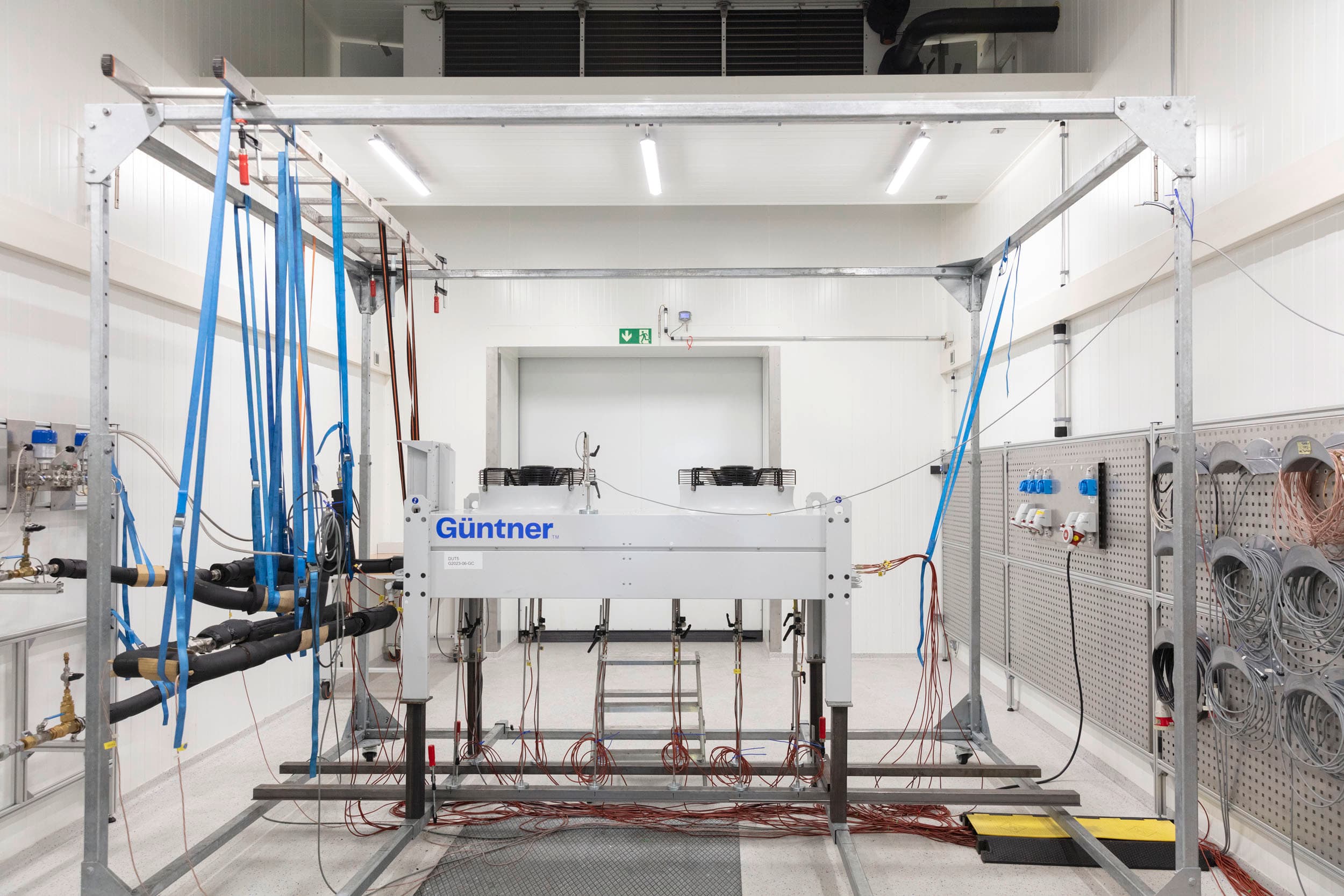
Prototypes of the new design are now created and are put through rigorous testing in Güntner’s laboratory in Germany. “This is where we can really get our hands on the product and see how accessible it is for cleaning purposes,” says Trenkenschuh. “We’ll open every movable part and make sure access is optimized.”
This includes looking at parts as simple as rivets: they need to be designed in such a way that they will not collect dust or dirt and can be easily cleaned. The procurement team will later be informed of the specifications for rivets that meet this requirement.
Once testing is completed, new models can enter production.
GÜNTNER PRODUCTS OFFER PEACE OF MIND
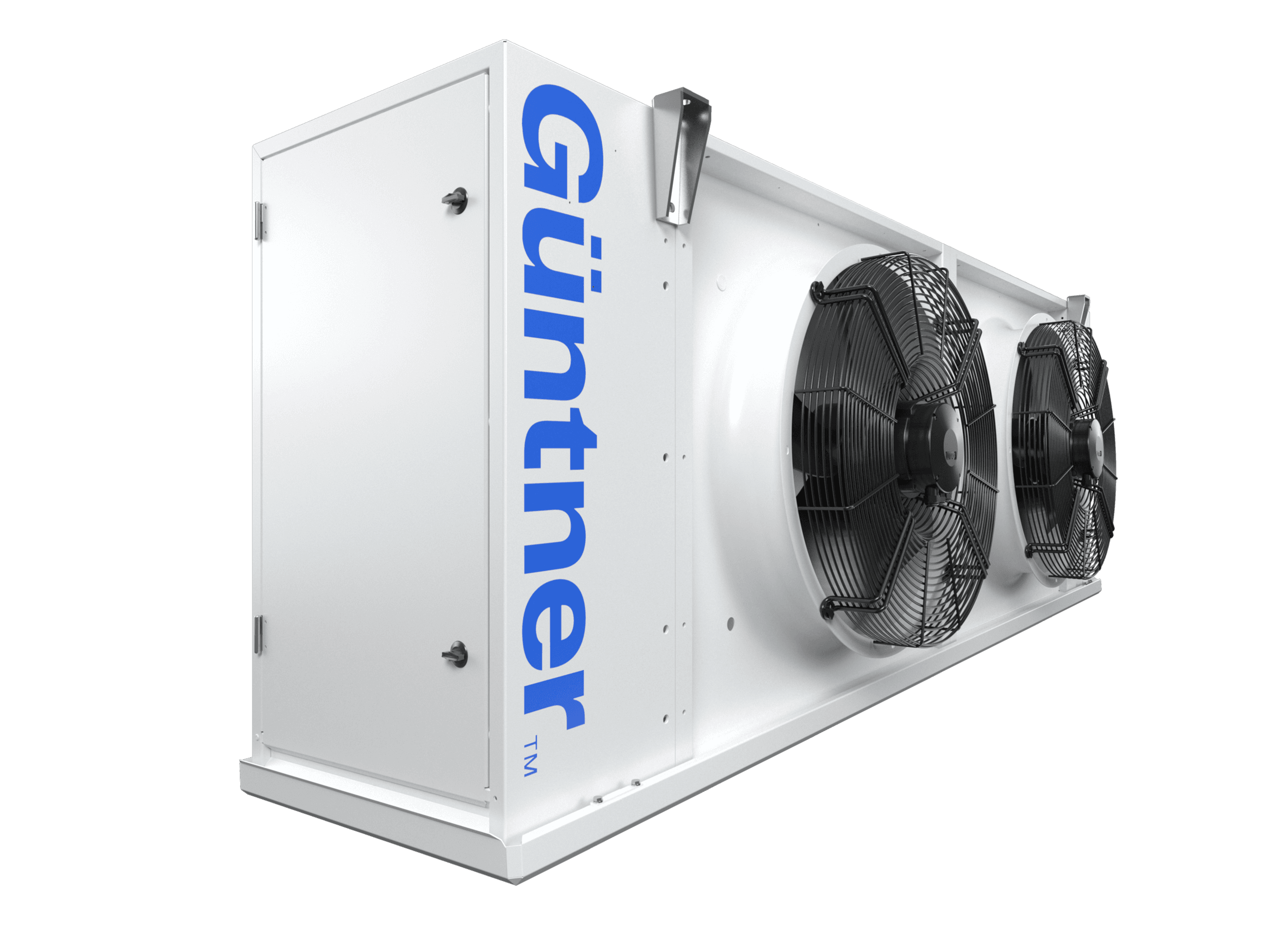
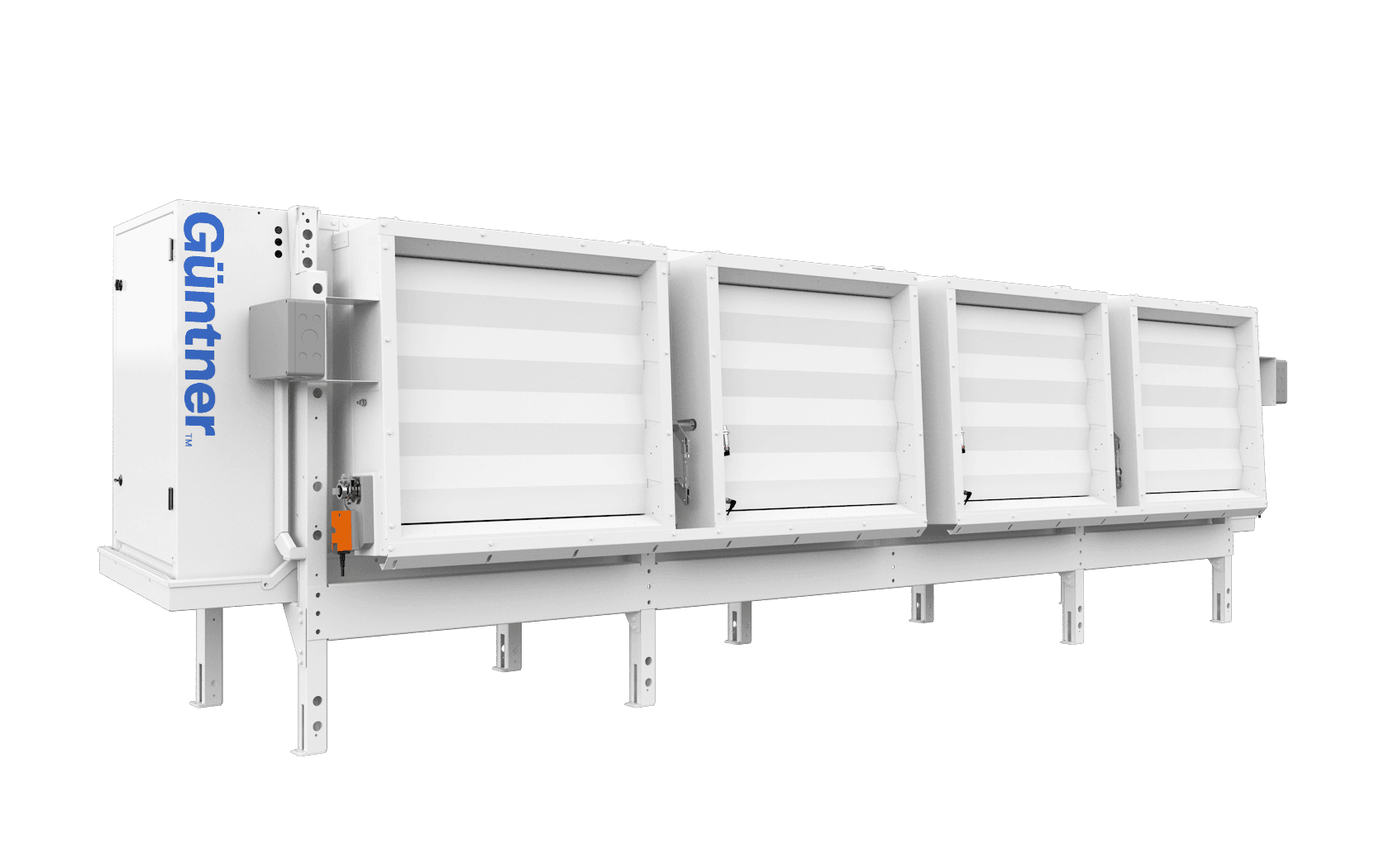
ALL GÜNTNER AIR COOLERS FROM THE SLIM, DUAL AND CUBIC FAMILIES ARE IDEAL FOR USE IN THE F&B SECTOR.
It is incumbent on companies in the F&B sector to ensure that their facilities are cleaned and disinfected on a regular basis, and that the cold chain functions consistently. Güntner’s cooling and refrigeration products are designed to help them meet their needs and bring peace of mind.
SAFE, EASY-CLEAN MATERIALS AND COATINGS
All of Güntner’s products are constructed from high quality, durable materials and components, ensuring reliability and a long life. The materials are also easy to clean and corrosion-resistant, either because of their natural properties or as a result of special coatings. For example, Güntner’s aluminium casings are coated with an easy-clean, anti-corrosive powder. The customizable VARIO range of air coolers can be supplied in stainless steel, a metal that is naturally easy to clean and corrosion-resistant, and can also withstand aggressive cleaning and disinfectant agents.
Fins can be coated with epoxy laminate for increased corrosion protection. The optional Coil Defender (Europe only) is an anti-corrosion powder coating that can be applied to the entire coil’s combination of copper and aluminium tubes in more corrosive environments.
OPTIMIzED ANGLES AND ACCESSIBILITY
Avoiding gaps and sharp edges is key in the design process to make sure that no pockets of dirt can form, especially in corners. Edges are bevelled at an angle of 45°, dead spaces are avoided, and smooth surfaces are the norm. In addition, accessibility is maximized using hinged trays, dedicated access ports and swivelling fan plates. An optional integrated condensate pump allows the condensate line to be installed in a false ceiling, adding further cleaning ease.
HYGIENE SOLUTIONS IN ACTION
GÜNTNER’S PRODUCTS ARE HELPING COMPANIES AROUND THE WORLD TO MEET THEIR HYGIENE RESPONSIBILITIES.
UV-C LIGHT INNOVATION, GERMANY
During the height of the Covid-19 pandemic, it became clear that meat processing facilities were proving fertile breeding grounds for the virus. Therefore, Güntner created a Cubic VARIO Air Cooler with added germ-killing UV-C lamps. “It had become very clear that it was necessary to protect not only the food coming out of the plants but also the people working in them,” says Michael Freiherr, Managing Director and CTO of Güntner. The award-winning Air Cooler has since been deployed in a number of locations, including a venison processing plant in Germany.
VEGAN MEAT ALTERNATIVE, AUSTRIA
A meat company in Austria required extremely high hygiene standards for the cultivation of mushrooms, to be used in the development of a vegan meat substitute. For this purpose, 27 Güntner Dual VARIO Air Coolers were specially customized in stainless steel and tested at Güntner’s production facility in Tata, Hungary, to ensure that mushroom spores did not adhere to the surfaces.
SOFT DRINKS PLANT, MEXICO
The soft drinks industry in Mexico has two major concerns: reducing energy and water use, and ensuring safety and hygiene in its cooling processes. One global soft drinks plant took the decision to install Güntner ECOSS Evaporative Condensers. These not only use half as much energy and water as traditional cooling towers, but also employ a closed cooling circuit, meaning that cooling water has no exposure to potential contamination from outside.
FOOD FREEZING & PROCESSING, SINGAPORE
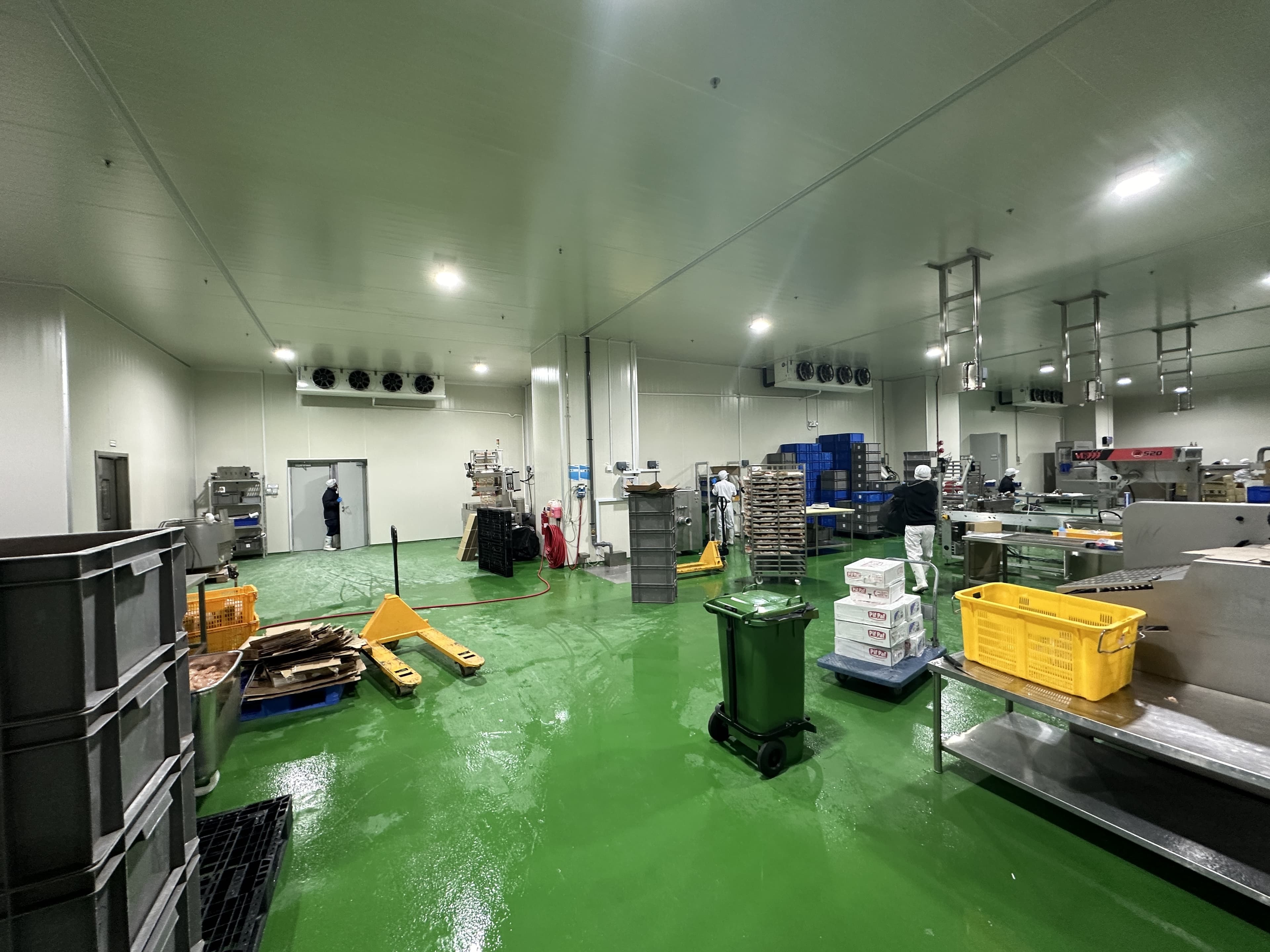
When CS Foods, a Singapore-based food company with a 30+ year history, decided to expand operations with a new factory, it chose Güntner Cubic COMPACT Air Coolers for the freezer and processing room, and Güntner Cubic VARIO Air Coolers for the blast freezer room. "Singapore places a strong emphasis on safety and cleanliness, and this extends to food safety,” says Nguyen Hong Quang, Sales Director for Southeast Asia. “Our products are renowned for their reliability and high hygiene standards.”
FOOD PRODUCTION, SOUTH KOREA
Harim Corporation is one of South Korea's leading producers of instant chicken soup, and at its large facility in Iksan City, Güntner’s technology ensures the freshness of all its chicken products. "In total, we've supplied around 300 units of heat exchange products that are used in the whole production process, from chilling to frozen storage," says Youngsu Shin, Güntner Sales Manager. "Our Cubic VARIO Air Cooler saves energy and is more hygienic compared to their previous water chilling system."
TACKLING LEGIONELLA
ANOTHER IMPORTANT HYGIENE ISSUE FOR THE COOLING SECTOR IS PREVENTING THE SPREAD OF LUNG INFECTIONS CAUSED BY AIRBORNE BACTERIA.
The legionella bacterium can cause the serious lung infection known as Legionnaires’ Disease, as well as a less serious illness called Pontiac Fever. The bacterium can grow and spread in building water systems and is a particular concern in conventional cooling towers and evaporative systems, which can disperse contaminated aerosol into the atmosphere, potentially affecting anyone in the nearby area.
The use of Güntner’s adiabatic cooling system with hydroBLU™ technology as an alternative to cooling towers can minimize the risk of bacterial infestation. It operates as a dry cooling system for most of the time, only using water when the ambient temperature is particularly high or demands on the cooling system as a whole are particularly heavy. Aerosol formation is minimised, and there is no stagnant water accumulation. Unlike with traditional cooling towers, water is not recirculated, and therefore bacteria do not have the opportunity to multiply. Güntner’s hydroBLU™ adiabatic system was recently redeveloped to make all components easier to reach, making maintenance and cleaning even simpler.