Why Air-Cooled Condensers Are Better for the Planet
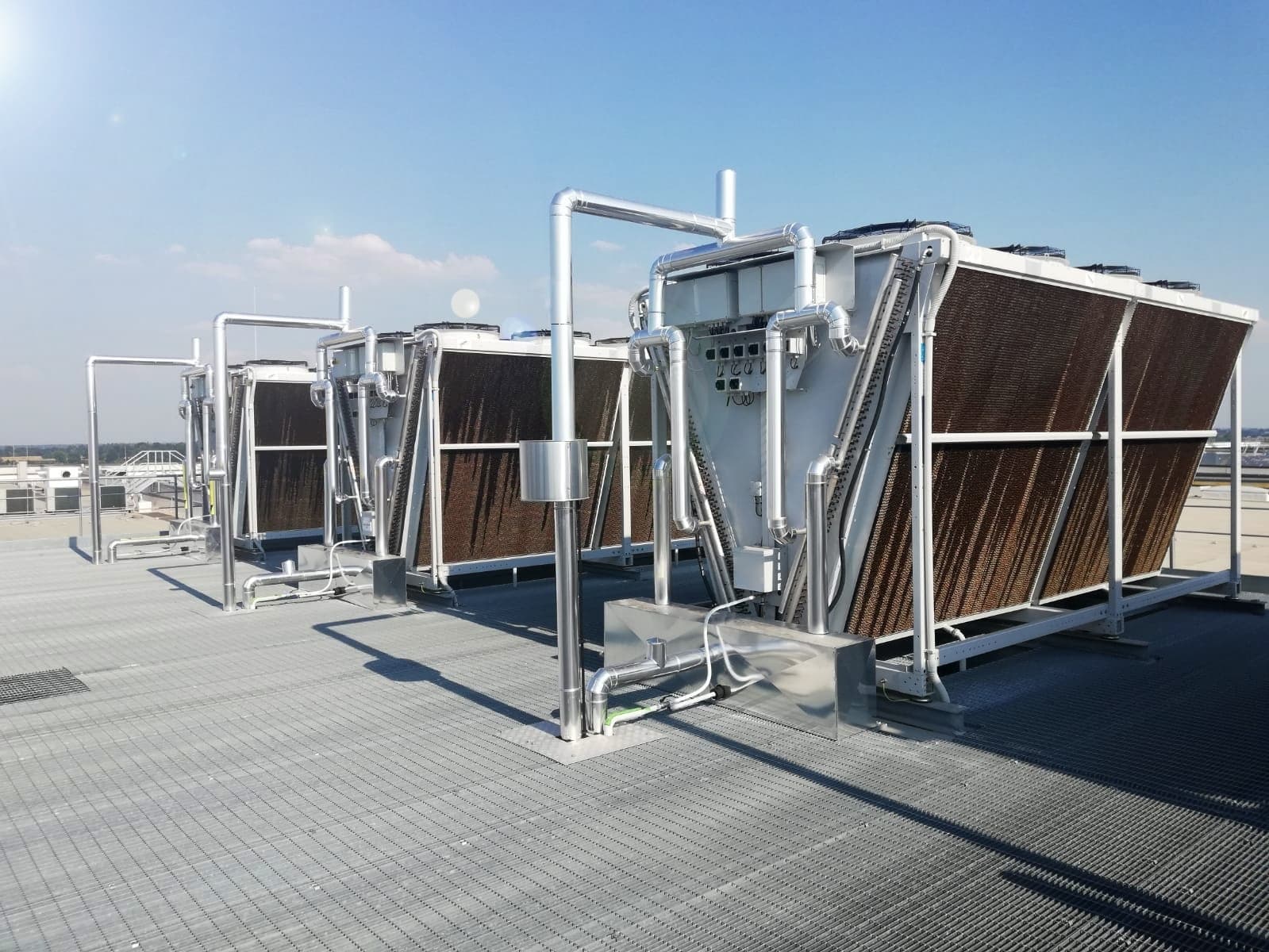
Water consumption is hugely reduced with dry cooling systems – and there’s an energy bonus, too
The surface of our Blue Planet is composed of 71% water, but less than 1% is available for human consumption. The rest is either salt water, frozen in polar ice caps or inaccessible. And this most precious of the world’s resources is in increasingly short supply.
Over the past two decades, more than half of the continental United States has experienced drought conditions, and in January this year, it was reported that around a third of the US is currently in drought. The lack of rain, together with overconsumption, are putting unprecedented pressure on the dwindling reservoirs that provide water and electricity for millions of us, as well as irrigation for our crops. America’s two largest reservoirs – Lake Mead in Nevada and Lake Powell in Utah and Arizona – experienced their lowest ever levels last year.
As a result of increasing water scarcity, there is growing pressure, both regulatory and ethical, on companies to do all they can to cut consumption. And there’s a financial imperative, too – the laws of supply and demand apply to water as they do to other commodities, and prices are rising for many.
Sustainable cooling technology is the answer
What can we do to cut water consumption in our cooling systems? A traditional cooling tower is highly water intensive. According to research by the EPA, approximately 1.8 gallons of water are evaporated for every ton-hour of cooling.
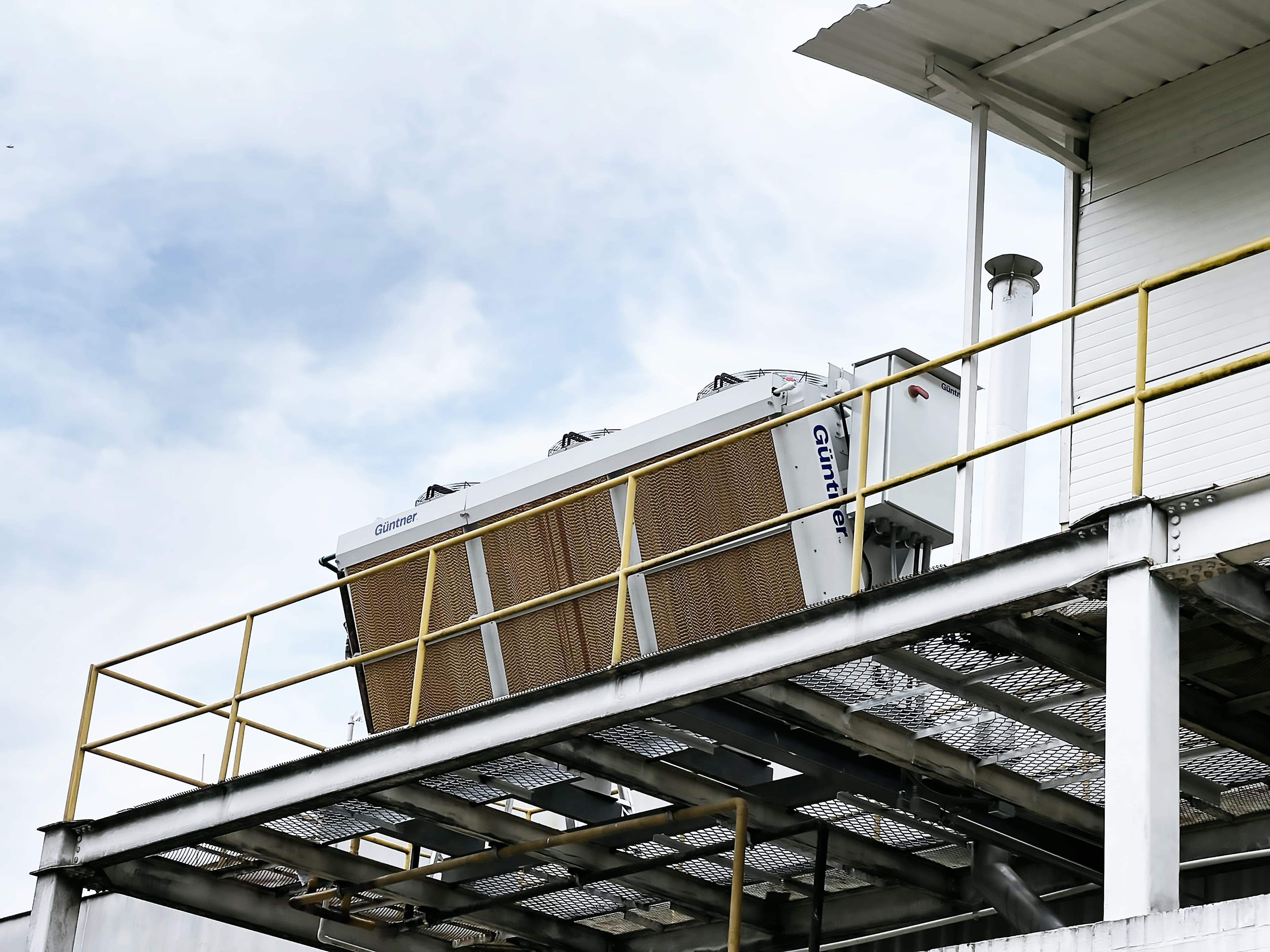
That’s why dry cooling, which uses air to transfer heat, is the obvious choice for companies looking for sustainable cooling solutions. And air-cooled condensers also offer sustainability benefit by reducing energy usage, thanks to EC motor technology. As an additional plus, unlike evaporative systems, dry systems do not release heated water into the environment, which can negatively impact local ecosystems.
Because dry cooling systems reduce both water and energy consumption and improve overall system efficiency, they can help building projects earn credits in schemes such as the Leadership and Environmental Design (LEED) certification program from the US Green Building Council. Buildings that are designed and constructed to meet LEED requirements or other green building standards not only have lower operating costs but also help companies in reducing carbon footprint and meeting ever more stringent environmental regulations.
Güntner has long been a leader in the field of sustainable cooling technology. We offer a wide variety of air-cooled condensers made from energy-efficient components, with variable speed drives and smart control systems that optimize performance and carbon emissions reduction.
Dry cooling in areas where temperatures are high
Areas where water scarcity is greatest often experience high ambient temperatures. In these hot, dry environments, a standard air-cooled condenser may struggle to dissipate heat, reducing its cooling capacity. Fans may also need to run faster and longer, increasing energy usage.
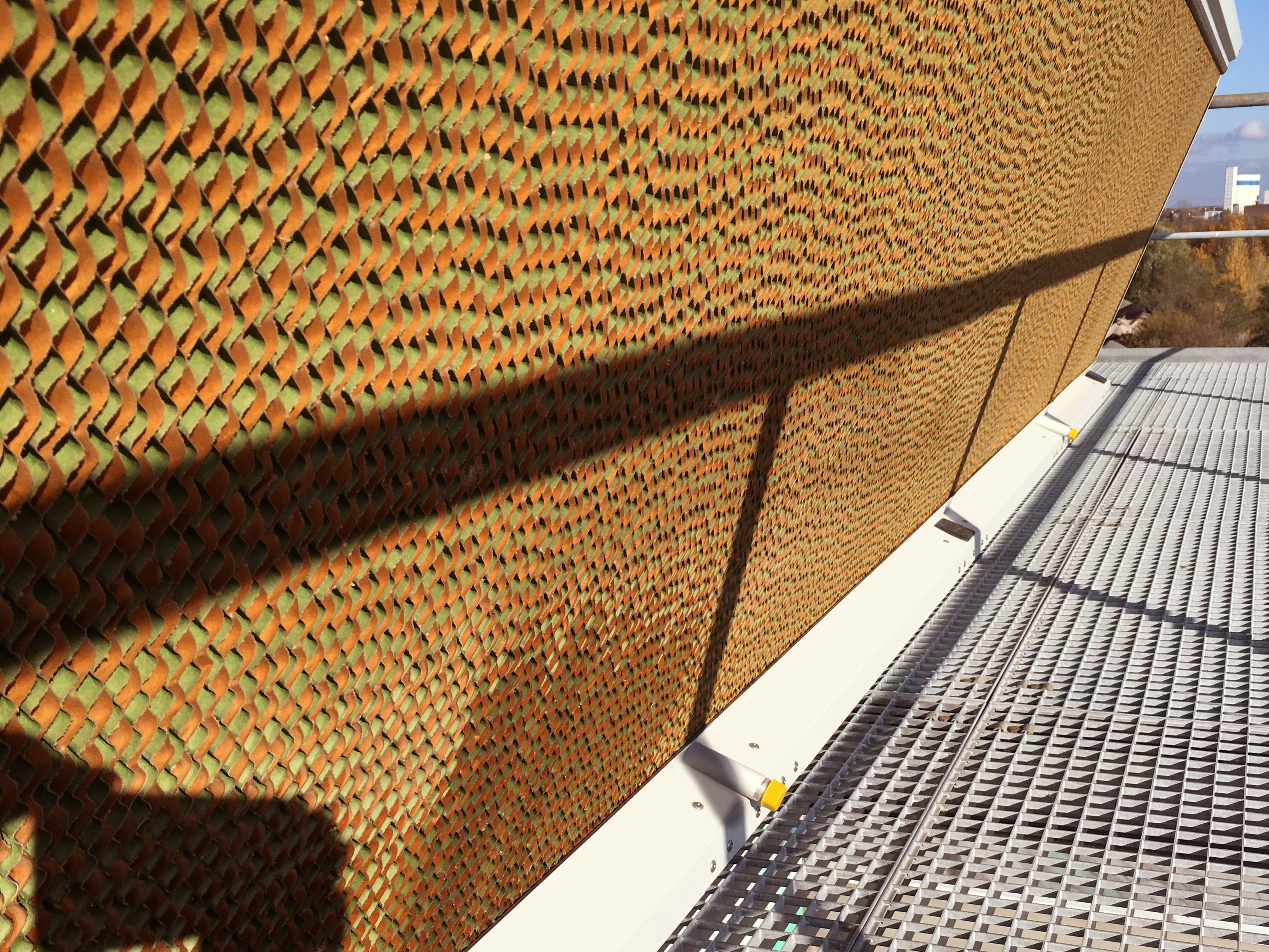
How to meet this challenge? The answer is an adiabatic cooling system, which uses a water spray and pads, when required, to precool the air. Yes, it means using water, but the system operates as a dry cooling system for most of the time and only uses water when the ambient temperature is particularly high or demands on the cooling system as a whole are particularly heavy.
Güntner is an established leader in adiabatic technology. Our Adiabatic Cooling System with hydroBLU™ features cutting-edge heat transfer and controls technology, reducing water consumption by up to four-fifths compared to a conventional water-cooled system.
Units are available in a wide capacity spectrum, from 40kW to more than 2,500kW. Wet when you need it and dry when you don’t, hydroBLU™ combines the reliability and ease of use of a dry cooler/condenser with the kind of system efficiencies associated with water-cooled heat exchangers.
The Güntner system’s controller has a patented algorithm that makes it possible to optimize the amount of water being used, taking into account environmental data such as air temperature and humidity, as well as how much water is available and how much can be evaporated. It’s then up to the customer to make the system sustainable in the way they need it.
Our experts will configure the system specifically for the customer’s preferences in terms of optimizing either water or energy savings, while also taking into account historical weather data at the installation site. Once the system is in operation, the built-in smart control continually monitors all significant parameters and automatically adapts the operating mode to the prevailing requirements. This ensures that operating costs are kept low and individual units are optimized.
As well as reducing water and energy consumption, there are other benefits from using Güntner’s adiabatic technology. No water treatment or chemicals are required, and the possibility of bacterial infestation is minimized, as there is no aerosol formation and no stagnant water accumulation. The heat exchanger coil remains completely dry, avoiding deposits on the fins.
We recently redeveloped our hydroBLU™ technology by introducing new, thicker pads, which increase the efficiency of the adiabatic process. The wetting system has also been revised, with all components easier to reach, making installation and maintenance easier.
Sustainable cooling in action
At a site in Montague, CA, we were able to evaluate annual energy and water consumption with hydroBLU™ compared with a conventional evaporative cooling unit. It brought a 45% saving in combined energy and water costs and showed an 80% reduction in water consumption: the evaporative cooler consumed a staggering 1.3 million gallons of water annually compared with 260,000 gallons by the dry cooler with hydroBLU™.
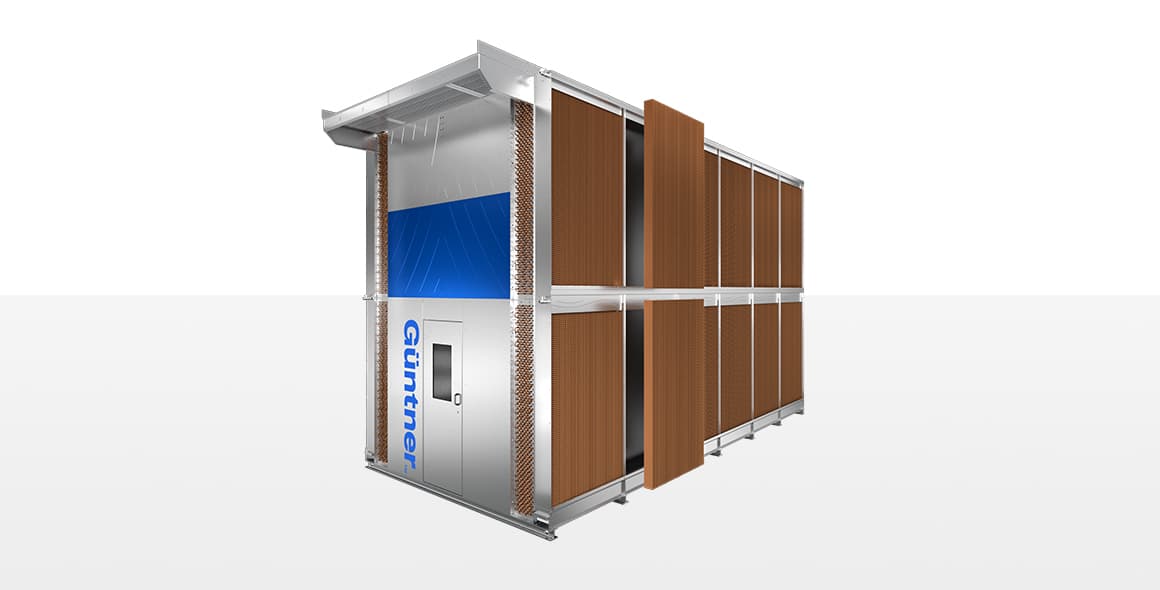
Similar savings are being made by Güntner customers across North America, particularly in air-conditioning, process cooling, refrigeration and data center applications.
When the Dollar Tree discount store company decided to renovate the air-conditioning at its 24 distribution centers, reducing water usage was a major consideration. For that reason, it chose Güntner High Density Ammonia Condensers with hydroBLU™, cutting water consumption by between 60% and 90%.
A cryptocurrency company that had located to an area of Texas where energy costs are low found that water was in short supply. It chose an adiabatic solution of 40 Güntner V-shape VARIO with hydroBLU™ that allows its data center to operate at peak efficiency while using minimum water.
Adiabatic cooling has benefits for all systems using planet-friendly natural refrigerants, but in particular it allows carbon dioxide systems to operate more efficiently in transcritical mode in warm and hot climates. In Mexico, the country’s largest transcritical CO₂ refrigeration installation operates with the help of two Güntner V-shape VARIO with hydroBLU™. A distribution center with cold storage and food processing areas in Mexico City, it needed a system that combined low water consumption with a natural refrigerant with low global warming potential – and maximum efficiency.
Whatever your cooling requirements, Güntner can help you make the most sustainable choices.